
University of Northern Iowa · Department of Psychological Sciences
Psychoneuroendocrinology Lab
Investigating the biological underpinnings of social behavior through salivary biomarker measurement.
About the Lab
The Psychoneuroendocrinology (PNE) Lab examines how hormones, immune markers, and other biological signals interact with psychological and social processes. Our work bridges social psychology and biological science, using non-invasive salivary enzyme immunoassay (EIA) techniques to measure biomarkers in naturalistic and experimental settings.
A central focus of the lab is understanding how experiences of social exclusion, ostracism, intergroup conflict, workplace harassment, and other social and organizational stressors are reflected in — and shaped by — the body's neuroendocrine and immune systems. By linking biological measures to behavioral and self-report data, we aim to build a more complete picture of how social life gets under the skin.
Biomarkers Measured
All biomarkers are measured from saliva using validated enzyme immunoassay (EIA) kits.
Cortisol
HormonePrimary glucocorticoid stress hormone. Elevated in response to social threat, exclusion, and evaluative stress. Follows a diurnal rhythm and is sensitive to acute psychosocial stressors.
Testosterone
HormoneAndrogen linked to dominance, status-seeking, and intergroup competition. Fluctuates in response to social interactions, challenge, and group membership cues.
C-Reactive Protein
Immune MarkerAcute-phase inflammatory protein produced by the liver in response to tissue damage or infection. Elevated CRP is associated with chronic social stress and loneliness.
Interleukin-6 (IL-6)
Immune MarkerPro-inflammatory cytokine involved in immune activation and the acute-phase response. Salivary IL-6 is sensitive to psychosocial stress and social rejection.
Alpha-Amylase (sAA)
EnzymeSalivary enzyme used as a proxy for sympathetic nervous system (SNS) activity. Responds rapidly to acute stress and social evaluative threat.
Secretory IgA (sIgA)
Immune MarkerMucosal antibody reflecting immune defense at mucosal surfaces. Suppressed by chronic stress; used as an index of immune competence in social stress research.
Methods & Approach
The lab uses salivary enzyme immunoassays (EIA) to quantify biomarkers from passive drool or Salivette collection. Samples are processed and analyzed using validated commercial assay kits. All procedures follow established protocols for sample collection, storage, and analysis to ensure data quality and participant safety.
Collection
Passive drool or Salivette collection under standardized conditions (fasting, no exercise, no oral hygiene within 30 min).
Processing
Samples centrifuged and aliquoted; stored at −80 °C until assay.
Assay
Validated commercial EIA kits run in duplicate; optical density read on a microplate reader.
Analysis
Concentrations calculated from standard curves; data integrated with behavioral and self-report measures.
Selected Lab Publications
- 1.
DeSoto, M. C. & Hitlan, R. T. (2015). Can Dual Hormones Ever Duel? Neuroendocrine Interactions During Social Exclusion. North American Journal of Psychology, 17, 555–574.
- 2.
DeSoto, M. C., Hitlan, R. T., Deol, R. S., & McAdams, D. (2010). Testosterone fluctuations in young men: The difference between interacting with like and not-like others. Evolutionary Psychology, 8, 173–178.
Lab Members
Quinn Kelly
Undergraduate Research Assistant
Honors Thesis: The Effects of Gender and Psychological Need-Threat on Deceptive Communication Following Exclusion: Testing a Moderated Mediation Model
Lab in action
Midwestern Psychological Association Conference
Chicago, IL · April 2026
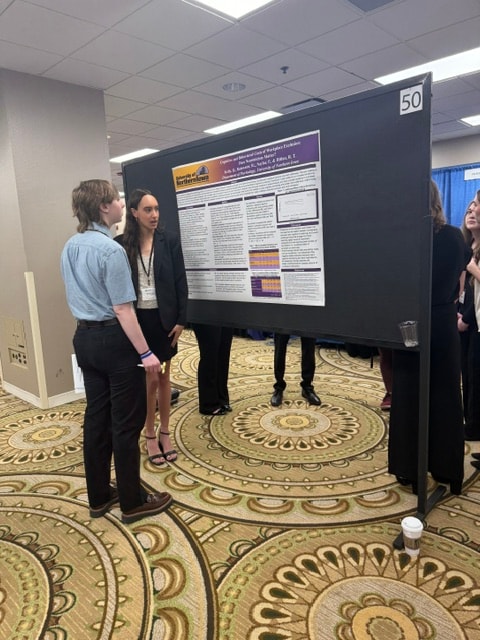
MPA 2026, Chicago
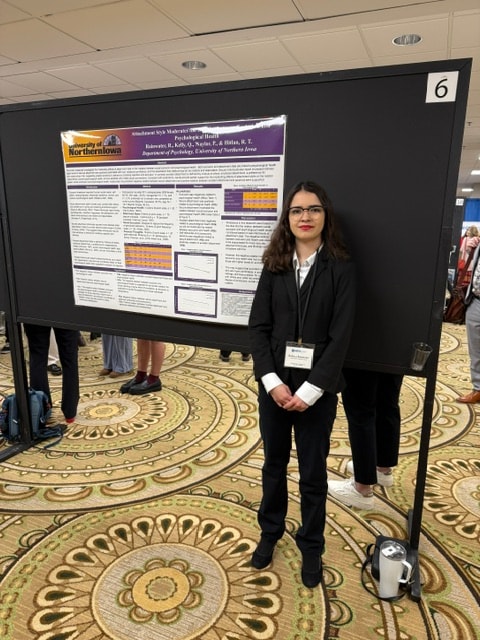
MPA 2026, Chicago
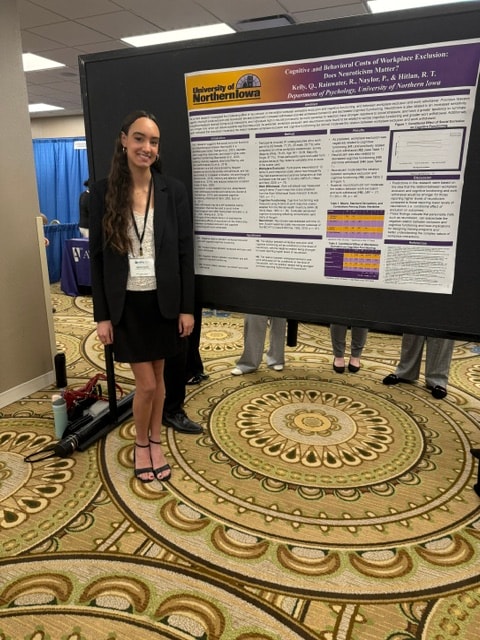
MPA 2026, Chicago
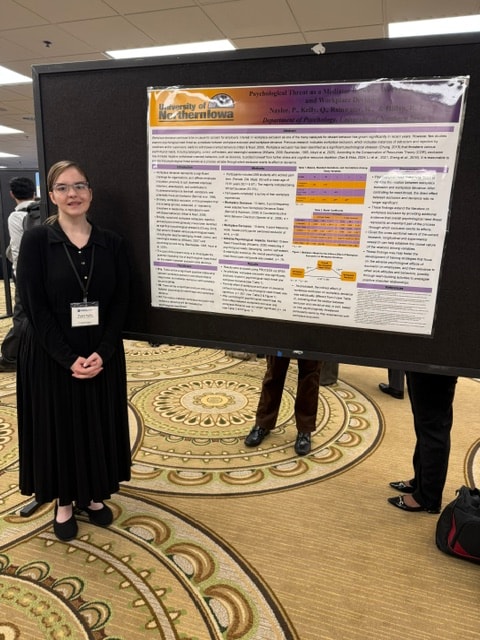
MPA 2026, Chicago
Collaborate or Join the Lab
The PNE Lab welcomes inquiries from graduate students, undergraduate researchers, and faculty interested in collaborative projects involving biomarker measurement. If you are interested in joining the lab or discussing a potential collaboration, please reach out.
Get in Touch